Loblolly Pine
Pinus taeda
- Where
- East Texas to Virginia, planted on more Southern acres than anything else.
- Bought for
- Pulpwood, chip-n-saw, sawtimber, poles.
- The catch
- The default plantation pine. Value turns on thinning history more than on age.
Tree Species
Every tract has a story older than the deed. These pages cover what a species meant before it was a commodity, what actually happened to it, what the medical record says people did with it, and - the part that pays - what the wood is worth to you today.
Most species information online is either a nursery catalog or a botany lecture. Neither one tells a landowner what a stand of it is worth, why a mill will or will not take it, or why the tree that built his grandfather's barn is not standing on his ground anymore.
These are long pages on purpose. They are sourced from USDA Forest Service silvics and wood publications, USDA NRCS plant guides, land-grant extension services, and the working record of the trees themselves. Where the popular story outruns the evidence, the page says so.
Each page carries a section on what the tree was used for medicinally. That is a historical record and nothing else - no page here recommends a treatment, gives a dose, or claims anything works. Several of these species are toxic to livestock. Talk to a physician, and talk to a veterinarian before your animals get near any of it.
The Words First
Three words get used as if they were interchangeable, and they answer three different questions. Two describe the tree standing in your woods. The pair hiding behind them - hardwood and softwood - is the one your timber check is written in.
What do the leaves do?
A deciduous tree drops all of its foliage for part of the year - bare limbs in January, new leaves in April. Nearly every broadleaf tree in the Eastern forest works this way, and in the timber trade the broadleaf trees are the hardwoods, whatever the wood in question actually feels like.
Think Oak, maple, walnut, hickory, yellow-poplar
How does it reproduce?
A conifer carries its seed in cones and its foliage as needles or scales. The trade calls the conifers softwoods - and again the word is a market category, not a hardness test. Longleaf pine is harder than a fair number of hardwoods standing on the same acre.
Think Pine, spruce, cypress, cedar, hemlock
Is it ever bare?
Evergreen is a habit, not a family: it only means the tree holds foliage year-round, old leaves or needles hanging on until new ones replace them. Most conifers are evergreen, which is how the two words got tangled - but neither one implies the other, and the exceptions below are the proof.
Think Most pines and cedars - and live oak, magnolia, American holly
The exception that proves it
A deciduous conifer
Cones and needles - a true conifer, scaled and sold as a softwood - and it still turns rust-orange and drops every needle each fall, standing bald all winter over the swamp. That is the name.
Full pageThe exception that proves it
An evergreen hardwood
A broadleaf oak that holds green leaves the whole year across the Deep South. Evergreen by habit, hardwood on every scale ticket ever written for it - the terms simply measure different things.
Because the split that prices timber is hardwood versus softwood, and it follows the botany, not the calendar. Softwood is the plantation and dimension-lumber economy: volume business, often sold by the ton, on a pulpwood-to-sawtimber ladder. Hardwood is the grade economy: bought stem by stem, priced by species and clear faces, where two logs off the same tree can differ by multiples. When a buyer says one word or the other, he is naming which of those markets your trees sell into - and every species page below says which side of the line its tree lives on.
Each one written the same way: what it meant, what happened to it, what the record says people did with it, and what the wood is worth to you now. Pine and white oak come first because that is where most of the money in Southern timber actually is.
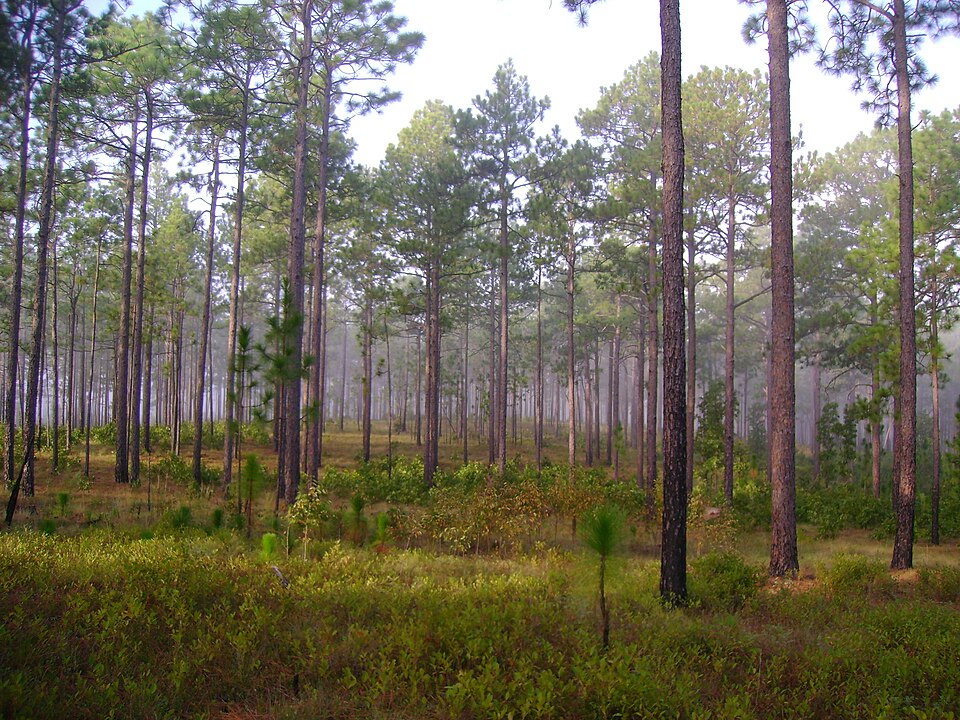
Pinus taeda, P. palustris, P. echinata, P. elliottii
The longleaf forest that covered the Southeast, the naval stores industry that worked it, the cutover that ended it, and the fast-rotation loblolly that replaced it. If you own planted pine, this is the page that explains what a mill is actually buying and how the price on your stand gets set.
Original longleaf range left
~3-5%
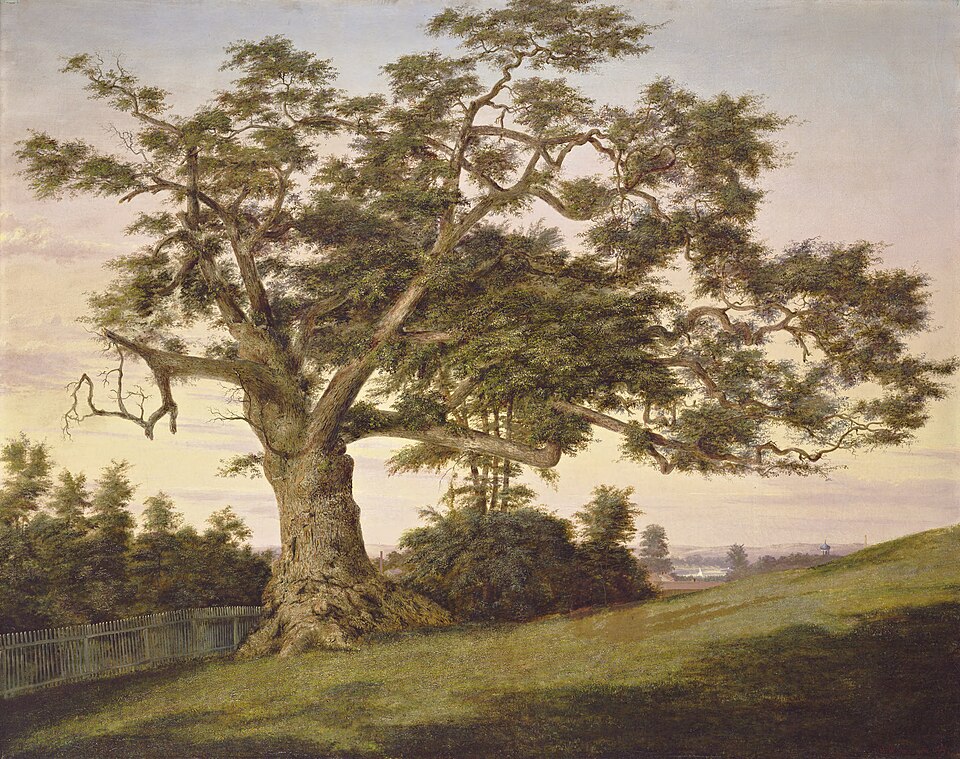
Quercus alba
The property that made a wooden hull watertight is the property that makes a barrel watertight, and it comes down to plugged pores. Old Ironsides, the live oak correction almost nobody makes, and why a stave mill will outbid a sawmill for one log off your ridge.
Stave-grade butt log
~100 years of growth
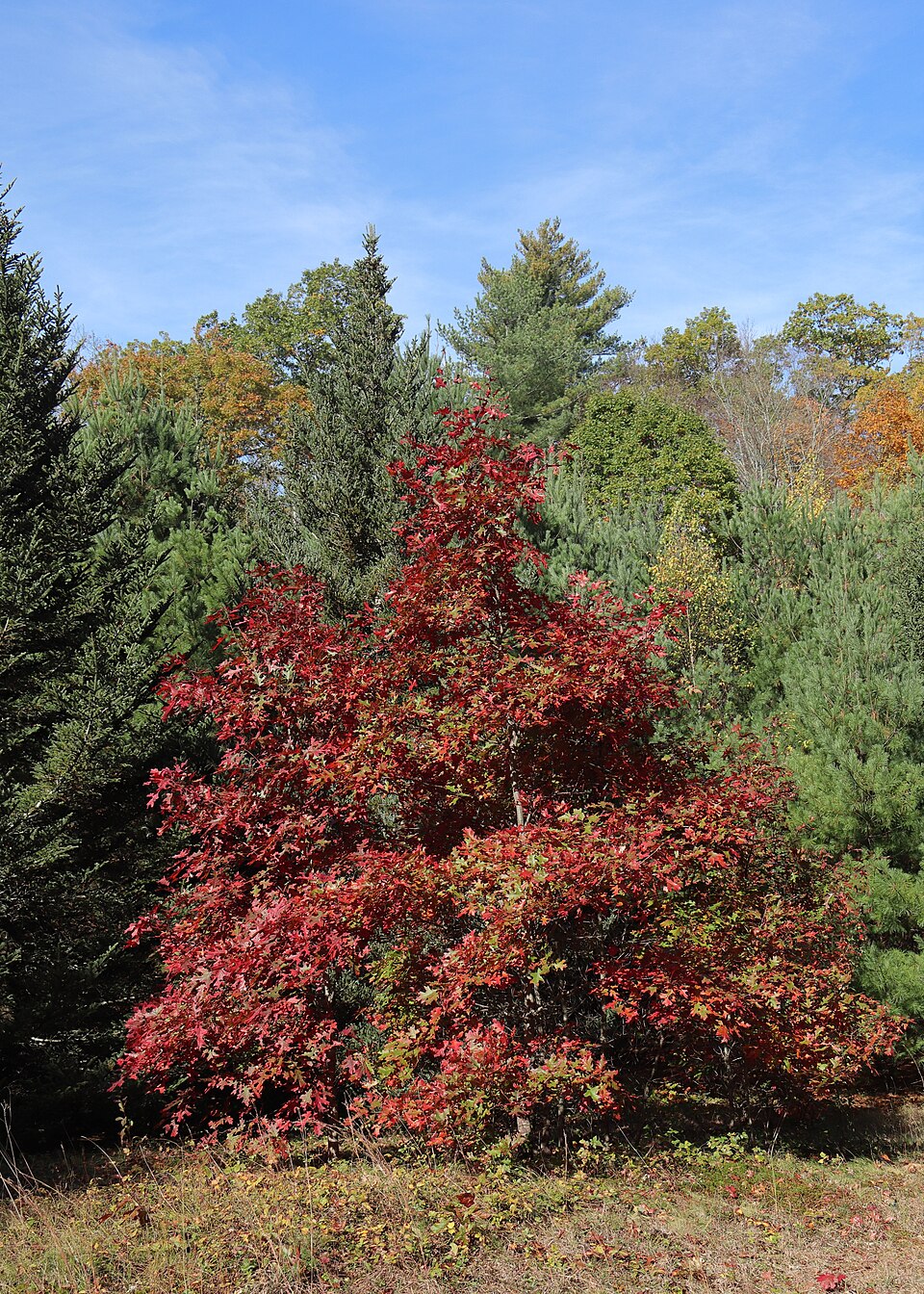
Quercus rubra
White oak holds liquid and red oak does not, and that one difference splits every oak load in the country into two prices. Why the open pores that keep it out of barrels made it the default American floor, what oak wilt does to a stand, and why the word red oak on your cruise sheet means eight different trees.
Species scaled as red oak
8 or more
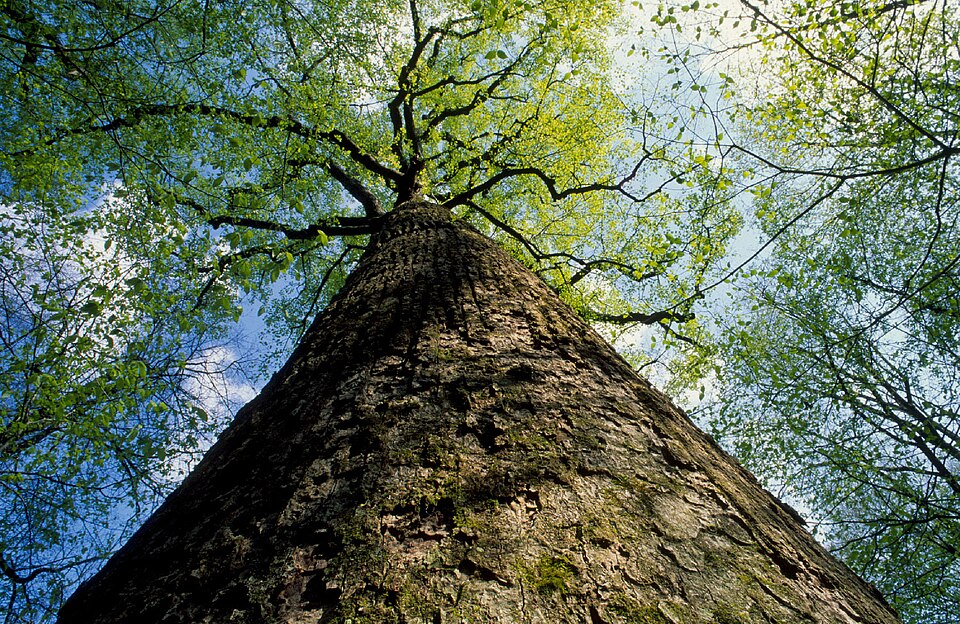
Liriodendron tulipifera
The canoe tree of the frontier and the tallest hardwood in the Eastern woods - close to 200 feet in the old coves. Why a tree that is not a poplar sells as one, what took up the room the chestnut left, and why a cove full of it is the most straightforward grade timber sale a landowner ever makes.
Tallest Eastern hardwood
nearly 200 ft
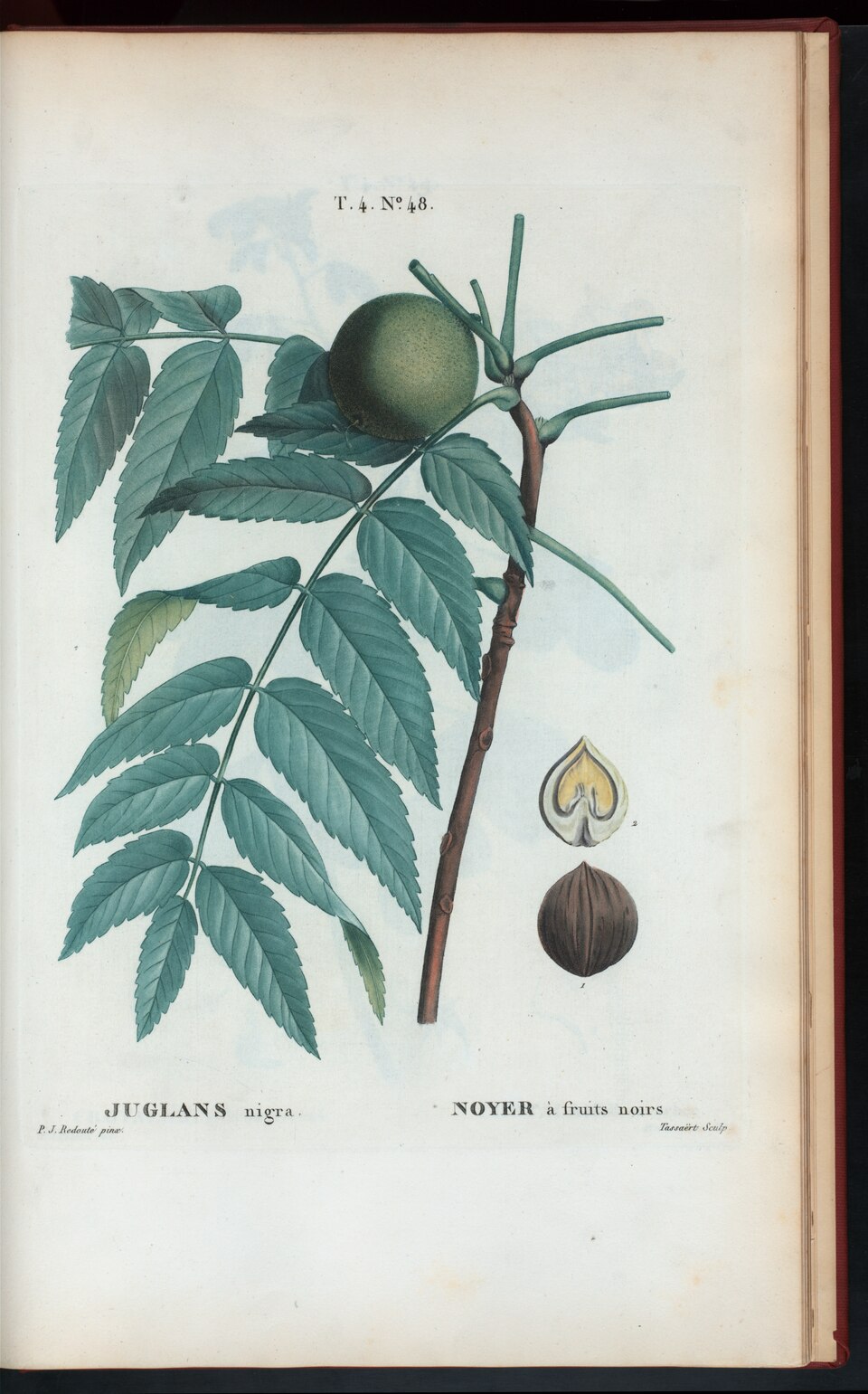
Juglans nigra
Gunstocks for two world wars, veneer buyers who will cross three states for one tree, and walnut thieves in the newspapers of the 1970s. What makes one walnut worth a truck and the tree beside it worth firewood - and why this species, more than any other, pays the landowner who takes a second bid.
Veneer premium over a sawlog
multiples
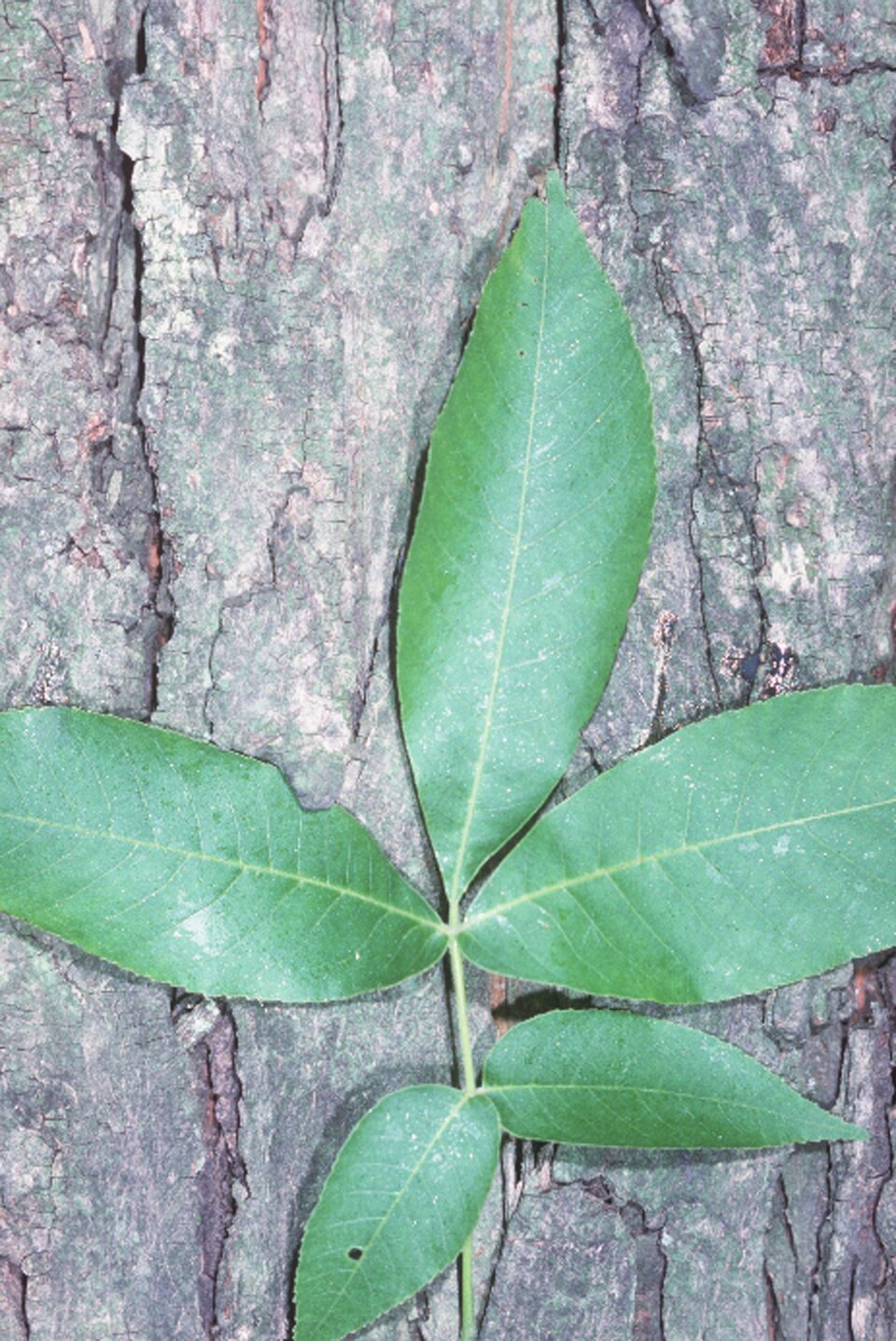
Carya spp. - shagbark, shellbark, mockernut, pignut
No common North American wood matches hickory's combination of strength, hardness, stiffness, and shock resistance - the Forest Service's own handbook says so. What pawcohiccora was, what Old Hickory meant as a soldier's compliment, why handle mills got picky, and where the money is when the flooring buyer passes.
Janka hardness (shagbark)
1,820 lbf
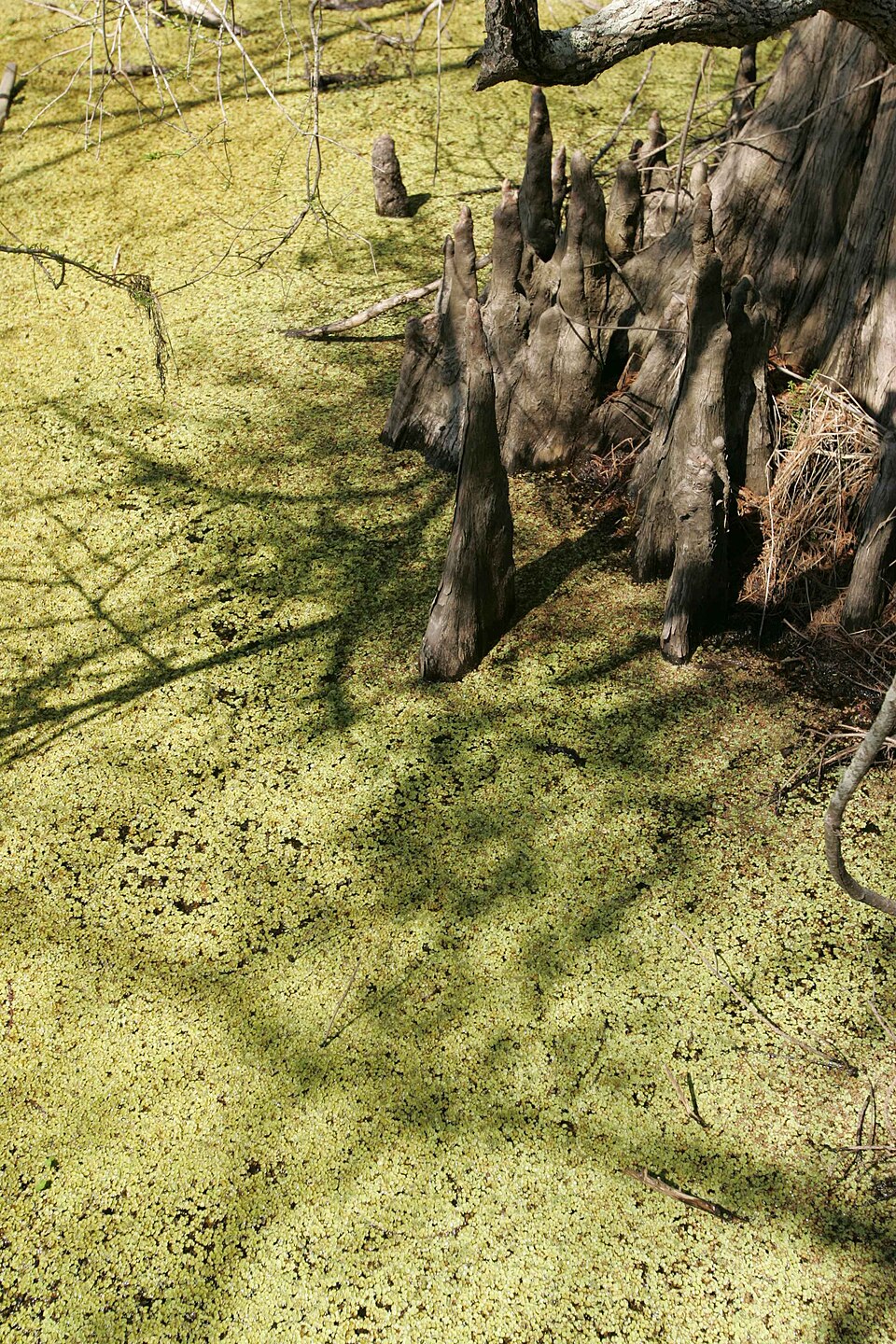
Taxodium distichum
The tree that breaks the rules: a deciduous conifer, bald every winter, knees rising out of the water around it. Trees in one North Carolina swamp have stood more than 2,600 years. What the swamp loggers did to the old growth, why "the wood eternal" was true then and is only half-true now, and what a cypress bottom is worth wet.
Oldest documented in the East
2,600+ years
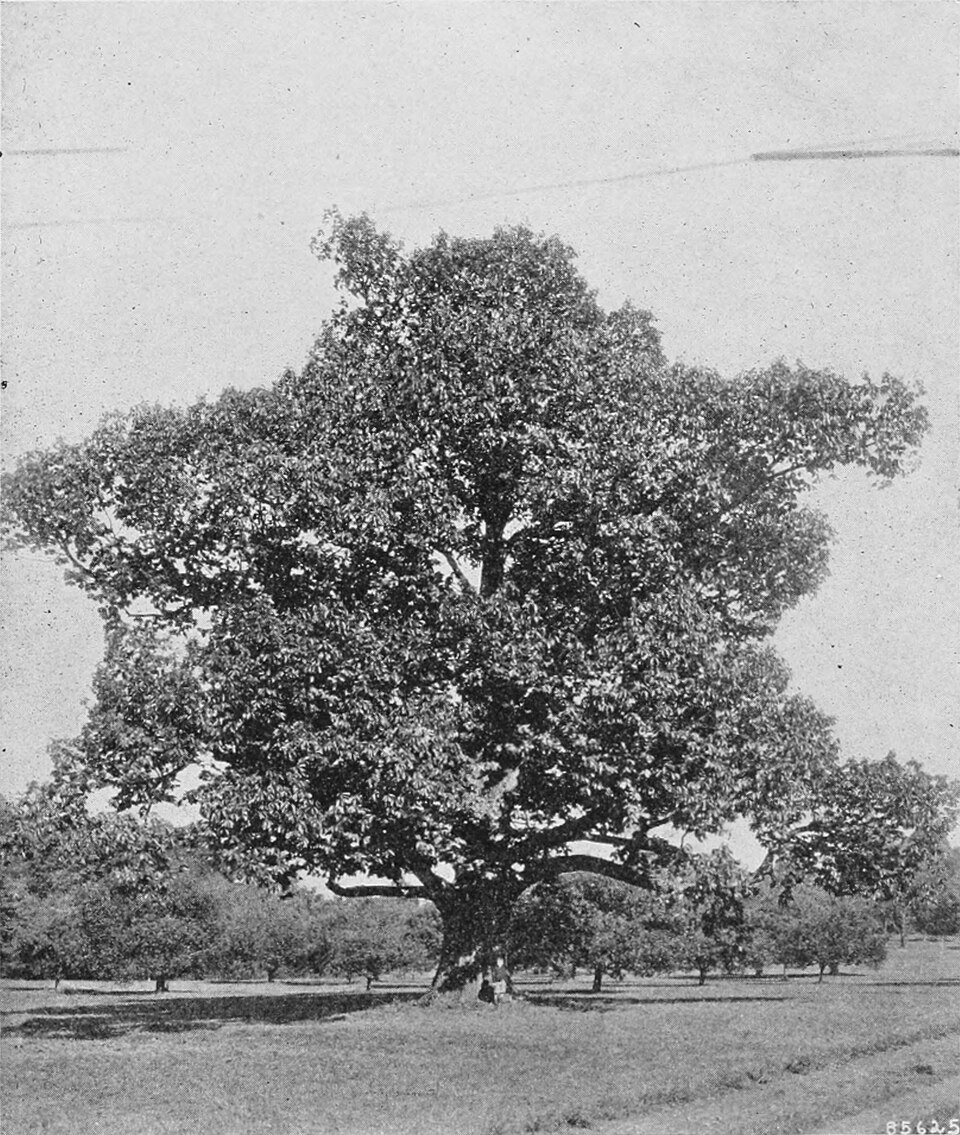
Castanea dentata
Roughly four billion trees died in one human lifetime. The stumps are still alive and still sprouting. What that means for the wood in your barn, the sprouts on your ground, and the honest state of restoration work.
Trees lost to blight
~4 billion
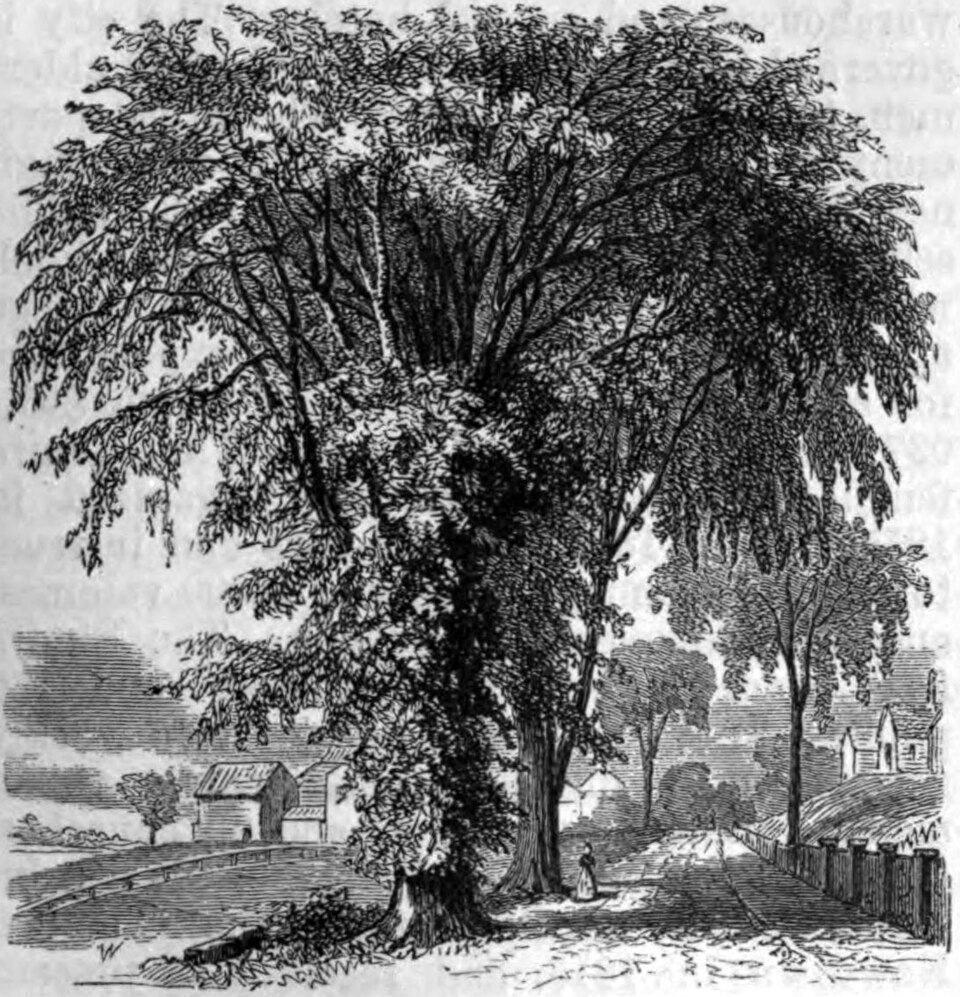
Ulmus americana, U. rubra, U. thomasii
The first woman in Norse cosmology, the Liberty Tree in Boston, water mains bored out of solid logs, and a wood that will not split no matter what you do to it. Plus the one elm with a documented medical record worth reading.
American elms lost to DED
tens of millions
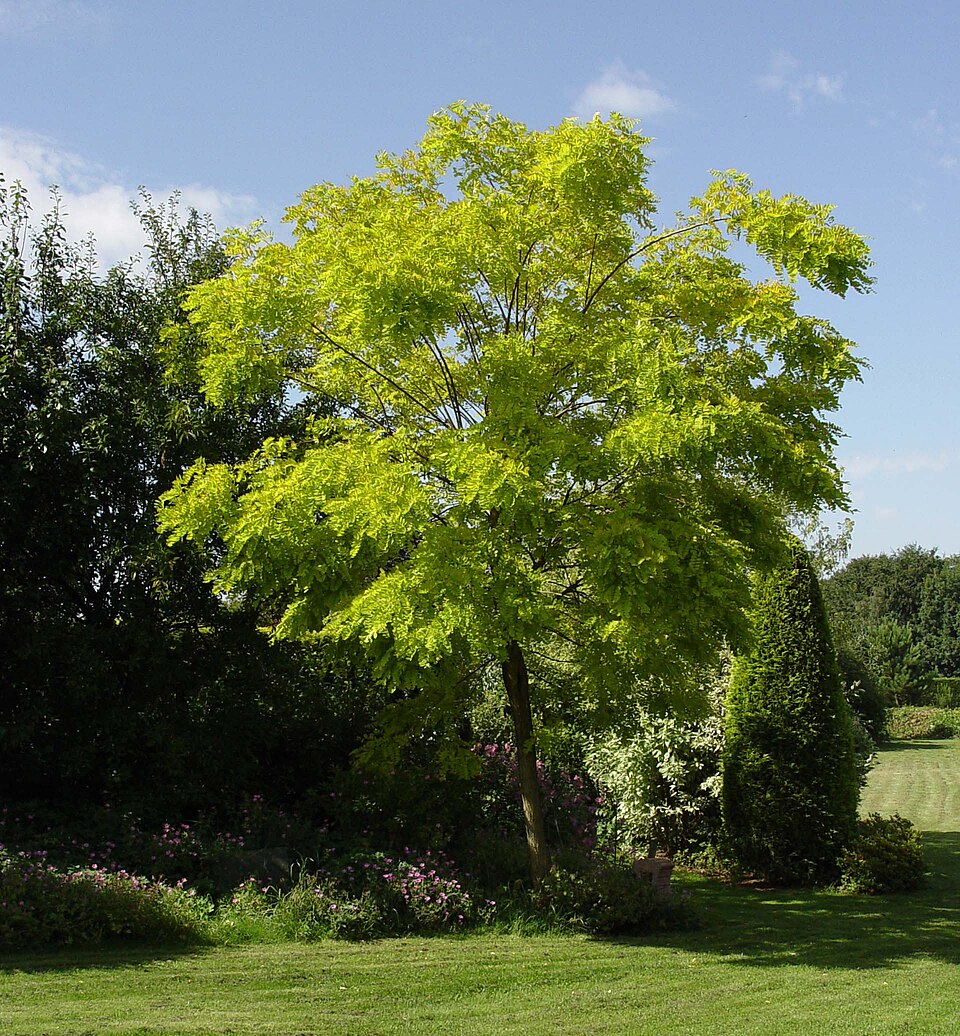
Robinia pseudoacacia (and the true acacias, Vachellia spp.)
The acacia of Exodus - the wood of the Ark of the Covenant - is a desert thorn tree from the Sinai. The acacia on a Southern fence line is black locust, and it is a different plant on a different continent. Both are real. Neither is the other - and one of them is poisonous to your horses.
Black locust Janka
1,700 lbf
The working list: what is standing on most Southern and Eastern ground, the Northwestern species the directory's mills name alongside it, who buys each one, and the catch. No deep dive - the species above get that.
Names on a log deck are trade names, not botany. A mill buying "red oak" means eight species, "SYP" means four, and "poplar" usually means a tree that is not a poplar at all. This list is written the way a scaler talks, with the botanical name beside it so you can match what a forester writes on your cruise.
None of this says who is buying. The sawmill and wood-processor directory lists 2,931 plants across 21 states with the species each state agency published beside them - a facilities list, not a market. No document in it says whether a gate is open, what it pays, or how far it will haul.
The volume of the South and the framing lumber of the country. Sold by the ton, graded by diameter, and priced against how far the truck has to drive.
Pine is the one softwood the source documents name outright rather than filing under softwood: 298 records do, and 160 of them are Georgia's listed mills and processors - the deepest pine list in the directory.
Pinus taeda
Pinus palustris
Pinus echinata
Pinus elliottii
Pinus virginiana
Pinus strobus
Taxodium distichum
Juniperus virginiana
Thuja plicata
Tsuga canadensis
Tsuga heterophylla
Picea and Abies spp.
Larix laricina, L. occidentalis
Pseudotsuga menziesii
Two groups, two different products, two different prices - and a mill scaler separates them before he quotes you. White oaks hold liquid; red oaks do not.
Three states' source documents pull oak out of plain hardwood at all, and 220 records name it - 95 of them among Wisconsin's listed mills. Not one of those documents says which oak, which is why both groups here are worth reading before you agree to a price.
Quercus alba
Quercus stellata
Quercus michauxii
Quercus macrocarpa, Q. muehlenbergii
Quercus lyrata
Quercus rubra
Quercus falcata
Quercus pagoda
Quercus nigra, Q. phellos
Quercus velutina, Q. coccinea, Q. palustris
Quercus virginiana
The mixed stand: the walnut a buyer will drive for, the sweetgum he will not, and everything in between that goes to ties, pallets, and pulp.
The mixed-stand names cluster in one state's list: 46 of the 58 records that name sycamore, and 33 of the 35 that name hackberry, are Arkansas's listed mills and processors - its source document names species tree by tree where most of the others stop at hardwood and softwood.
Liriodendron tulipifera
Carya spp.
Carya illinoinensis
Liquidambar styraciflua
Nyssa sylvatica, N. aquatica
Juglans nigra
Juglans cinerea
Prunus serotina
Fraxinus americana, F. pennsylvanica
Acer saccharum
Acer rubrum, A. saccharinum
Fagus grandifolia
Platanus occidentalis
Celtis occidentalis, C. laevigata
Populus deltoides
Populus tremuloides
Alnus rubra
Tilia americana
Betula alleghaniensis, B. nigra
Ulmus americana
Robinia pseudoacacia
Castanea dentata
Diospyros virginiana
Sassafras albidum
Trade names on a log deck vary by region and by mill. If a buyer names a species you do not recognize on your own ground, ask him which group he is scaling it in before you agree to a price.
AXE USA publishes no research of its own. Everything on these pages is read out of USDA Forest Service, USDA NRCS, land-grant extension, and published historical sources, each linked at the bottom of the page so you can go read the original.
The reference rows above are deliberately short - species, buyers, and the catch. Full pages go up one at a time, read and sourced, rather than all at once; ten are up now, from pine through bald cypress. If the tree standing on your ground is not the one you needed answered, say so.
Before any of these trees comes downWhat OSHA's logging standard and extension publications say about felling and running a saw - the cuts, the hinge, the retreat, the gear, and where to get hands-on training.Tell us which tree is next